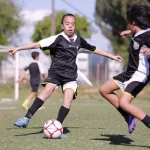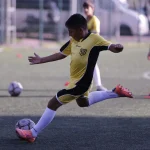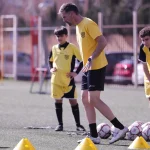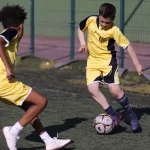
When we talk about fitness training in youth football, many families think of weights, endless running or exhausted children. Nothing could be further from the truth. Done properly, fitness training at developmental ages isn’t about “grinding” the player down: it’s about helping them move better, get injured less and enjoy football more.
In this article I explain what a young player should work on at each stage, which errors to avoid and how we do it at ActiveLab, our 120 m² gym in Alcalá de Henares.
What fitness training is for in a young player
Today’s football is fast and intense: acceleration, braking, changes of direction, jumps and contact. A player without a suitable physical base gets to actions late, tires sooner and is more exposed to discomfort. Fitness training in youth football has four goals:
- Improving coordination and body control, the basis of any technical movement.
- Developing speed, agility and change of direction, key qualities in football.
- Gaining strength progressively and safely, suited to age.
- Preventing injuries, working on stability, mobility and good movement patterns.
What to work on at each stage
Ages 6 to 9: moving well through play
At this stage the aim is for children to learn to run, jump, brake, turn, throw and keep their balance. All through play. It’s not about performance, but about a rich variety of movement. That’s what we do in Active Kids: motor development, coordination, strength, balance and agility with adapted, dynamic training in small groups.
Up to age 12: coordination and running technique
The player starts training with more structure, but the priority is still movement quality: foot placement, running technique, well-executed jumps and landings, bodyweight work. It’s a very good stage for improving agility and reaction speed.
From age 12: strength and prevention
With a good base, strength work can be introduced progressively and always under supervision, along with specific prevention exercises. In Active Performance we work on football-specific fitness at two levels, under-12 and 12+, adapting loads and exercises to each group.
The most common errors
Copying an adult’s training
A child isn’t a small adult. Adult gym programmes aren’t designed for a growing body. The key lies in progression and professional supervision.
Doing volume rather than quality
Running more doesn’t mean being better prepared. Ten well-executed repetitions are worth more than fifty with poor technique. At developmental ages, how an exercise is done matters more than how much is done.
Forgetting rest
Between school, club, matches and other activities, many young players build up more load than it seems. Fitness training has to be added sensibly to the rest of the week, not add pointless fatigue.
Ignoring discomfort
Recurring discomfort isn’t something to put up with. For any persistent pain, the first step is to consult a healthcare professional. If a progressive return to training is then needed, at ActiveLab we have a rehabilitation and return-to-play service to support the player from the gym back to the pitch.
How we work on it at ActiveLab
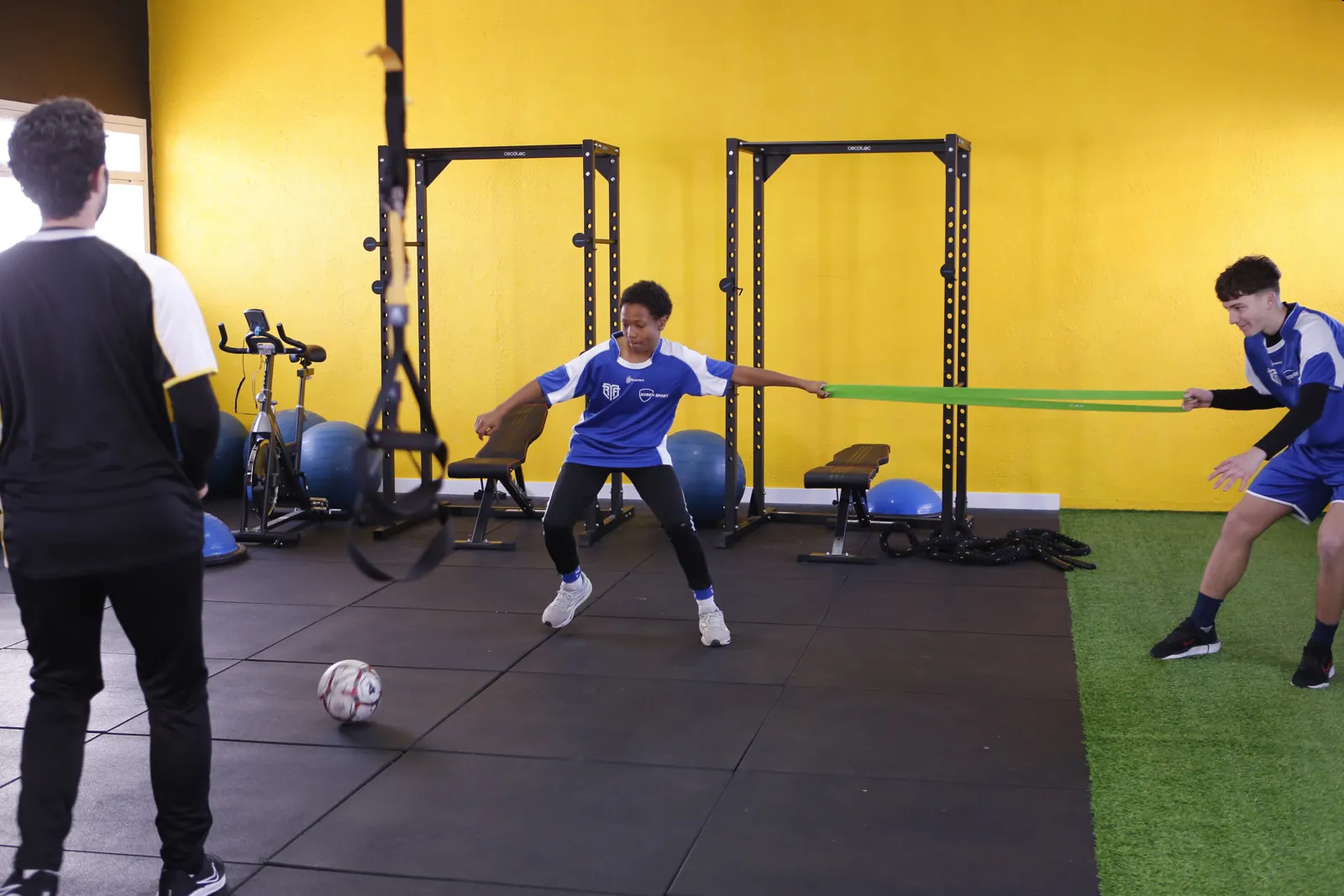
ActiveLab is a space designed for football: an open-plan 120 m² room with a technical floor area and an artificial turf area, racks, plyometric boxes, medicine balls and speed, agility and prevention equipment. We always work in small groups with follow-up for each person.
- Active Assessment: a physical assessment to know the starting point, set goals and measure progress.
- Active Kids (ages 6-9): movement, coordination and agility through play.
- Active Performance (under-12 and 12+): football-specific fitness training.
- Personalised training: individual or pair sessions, adapted to the player’s goals.
- Rehabilitation and return to play: a progressive return to training and sport.
And not just for players: while their children train, families can sign up for Active Functional, Active Women o Active Longevity +60. MR Fútbol Academy players and their families get a 10% discount.
Frequently asked questions
Is it safe for a child to do strength work?
Yes, as long as the work is suited to their age, progressive and supervised by professionals. With the youngest, we work with their own body weight and through play.
How many sessions a week does a young player need?
It depends on their age, how much they train with their club and how many matches they play. That’s why we start with an assessment: to adjust the load to each player and avoid adding unnecessary fatigue.
Can it be combined with technical training?
Yes, and it’s a very complete combination: technical training works on technique and decision-making, and ActiveLab on the physical base that allows them to be executed faster. We have packs combining the two.
Take the first step
If you want to know where your son or daughter stands, start with an assessment at ActiveLab. Contact us o write to us on WhatsApp and we’ll explain which programme suits their age and goals.