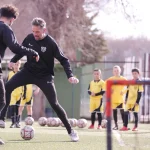
The Real Madrid Foundation’s Social-Sports Schools: training with purpose, values and excellence
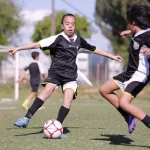
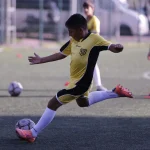
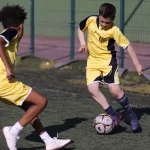
The Real Madrid Foundation’s Social-Sports Schools (ESD-FRM) aren’t just sports clubs for learning to play football or basketball: they’re educational spaces where sport, values, inclusion and personal development come together. This approach to training and all-round education has unique features that make it exemplary, both for young players and for families concerned with their children’s healthy, complete growth.
What are the Social-Sports Schools?
- Real Madrid Foundation programmes for under- 5 to 17, focused on sport (mainly football and basketball), together with solid education in values.
- They are present in many Spanish cities, with a significant number of inclusive and adapted schools for children with different types of disability (ASD, Down’s syndrome, intellectual disability, etc.).
- As well as sport, they cover aspects such as health, healthy habits, nutrition, hygiene, diversity, respect for the environment and education in values such as teamwork, responsibility and equality.
Training and education methodology
Here are the elements that set apart the way these schools train:
- “For a REAL education: Values and sport”
The Foundation has developed a structured methodology called For a REAL education, applied in all its specific manuals: “Training football, teaching values”, “Introduction to Valorcesto”, “Inclusive football and Valorcesto”, etc. It isn’t only about teaching sports techniques, but about organically incorporating positive values such as responsibility, respect, equality, effort and solidarity alongside learning the sport. - Specifically trained coaches
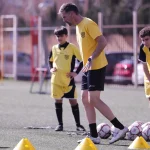
More than 200 professional coaches work at these schools, all trained in this values + sport methodology. This ensures there’s no gap between what is preached and what is trained. - Adaptation and inclusiveness
The schools aren’t all the same: some are adapted for children with cognitive disabilities, diverse intellectual development, ASD, Down’s syndrome, vulnerable socio-economic situations, etc. The work aims to make sport a right for all, not an ability of a few. This includes adapting training, timings, exercises, expectations and materials to suit different abilities. - An all-round approach
As well as physical/technical aspects, they teach healthy lifestyle habits: nutrition, hydration, hygiene; respect for the environment; living together; road safety education; etc. Attention is also paid to emotional and social development and to building self-esteem, teamwork and values for living together. - Adapting to the social environment
The schools adapt to the reality of the environment in which they operate: urban, rural, with vulnerable populations, conflict areas, etc. This means sport doesn’t become an isolated space, but a bridge between daily life, each community’s socio-cultural challenges and young people’s aspirations.
Advantages of this way of training
These are some of the most important advantages offered by the Real Madrid Foundation’s Social-Sports Schools:
- Complete personal development, beyond sport. Children learn to work in a team, to respect others, to make an effort, to tolerate frustration, to relate better, to have discipline and empathy, etc.
- Inclusion and equity: groups with fewer opportunities also have access to spaces for sport and education, which reduces social gaps.
- A safe, educational environment: by focusing less on purely sporting competition and more on human growth, unnecessary pressure is reduced, enjoyment of sport is encouraged and an atmosphere is promoted in which mistakes aren’t punished but learned from.
- All-round health: by teaching healthy habits from an early age, not only sports performance improves, but also quality of life.
- Constant motivation: seeing that they’re not only asked to win, but to progress, learn and behave with values, many young people increase their commitment, self-esteem and desire to improve.
- Ability to adapt: coaches adapt training to each child, allowing each one to advance at their own pace, correcting weaknesses and reinforcing strengths.
- Vision for the future: the aim isn’t to create quick champions, but people who know how to apply what they’ve learned on and off the pitch. What is passed on is useful for life: respect, responsibility, teamwork, etc.
Some key figures
- More than 3,000 children take part in the Real Madrid Foundation’s social-sports schools in Spain, in football and basketball, including adapted and inclusive ones.
- Dozens of football and basketball schools, adapted and inclusive, are run each season, serving approximately 5,000 boys and girls overall in some opening periods.
- At least 15% of places are reserved for children at risk of exclusion.
Final thoughts
The Real Madrid Foundation’s Social-Sports Schools show that it’s possible to combine sport and values in a structured, serious and conscious way, with visible results not only in technical skills, but in the all-round education of the person.
For young players and parents looking for more than training to compete, these schools offer a very inspiring model: not just “how to play”, but “how to be”, and that makes all the difference.