Every September many families in Alcalá de Henares and the Corredor del Henares ask themselves the same question: is it worth signing my child up to a football technical school? And if so, how do I know which one to choose?
As a UEFA Pro licensed coach and director of MR Fútbol Academy, here are the keys I’d look at as a parent before deciding. They can be used to assess any school, ours included.
First: what technical training is (and isn’t)
Technical training focuses on the player’s individual technique : control, passing, dribbling, 1v1 moves, striking and the decision-making that goes with each movement. It doesn’t replace the club. The club prepares matches, works on the collective and competes. Technical training gives the player what is very hard to achieve in a session with 20 or 25 children: lots of repetitions with the ball and personal corrections.
That’s why a good technical school attracts players from many different clubs. It doesn’t compete with the club: it gives it back a better player.
7 keys to choosing a technical school
1. The number of players per coach
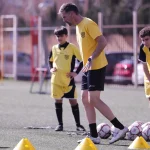
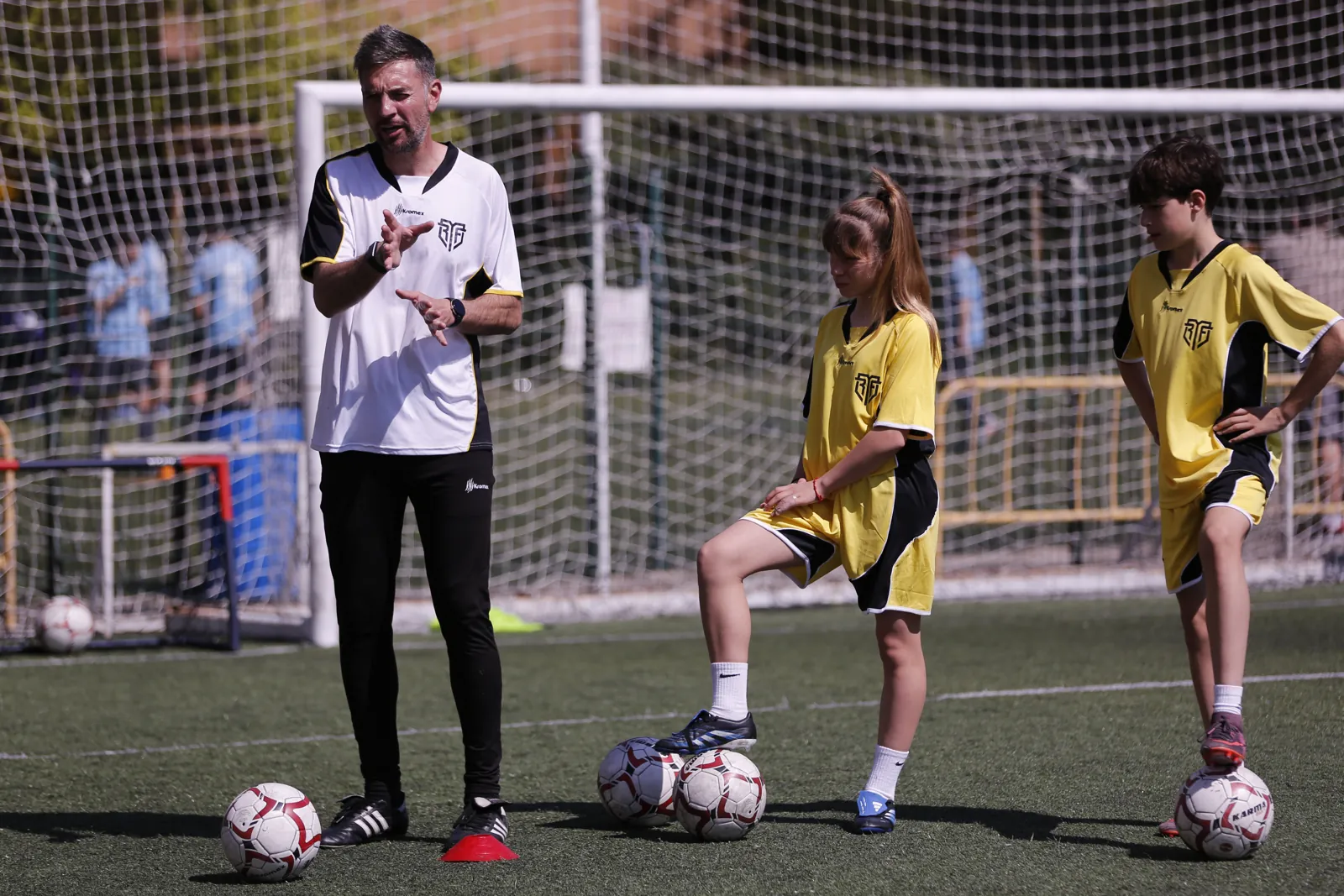
It’s the first thing I’d ask. If a coach has 15 children to look after, the session looks too much like a normal training session. At MR Fútbol we work with groups of up to 10 players and always 2 coaches, one of them focused on finishing. That way each player gets feedback in every exercise.
2. A methodology that can be explained
Ask what a typical session looks like. If the answer is vague (“we do a bit of everything”), be wary. A good school has a clear structure and can explain what each part is for. Our 60-minute sessions always follow four blocks: warm-up game, passing and control, 1v1 or 2v1 situations with decision-making, and finishing on goal.
3. Real time on the ball
An hour’s session doesn’t mean an hour of football. Long queues, endless explanations and equipment changes eat up the time. Notice how long your child spends waiting. We set up the session before starting and do exercises in mirror fashion, on both sides, so that queues are short and the player touches the ball a lot.
4. Both feet being worked on
It’s one of the best signs of quality. A school that makes players use their non-dominant foot in every block is thinking about their long-term development, not just about making the session look good. If this topic interests you, we explain it in depth in our guide to playing with both feet.
5. Decision-making, not just the movement
Repeating a movement without an opponent has its limits. Players really improve when they have to decide under opposition: when to dribble, when to pass, where to direct their touch. Ask whether there are real game situations in every session.
6. A clear price with no surprises
Ask for the full price: fee, registration, kit, extras. Some schools have an attractive fee and then add registration and compulsory kit. At MR Fútbol the fee is €65 a month, with no registration fee and kit included.
7. Timetables compatible with club and school
Technical training should add, not exhaust. Look for a weekly session at a time that doesn’t clash with club training or overload the player’s week. Our sessions are one hour a week: at the Complutense venue, Saturdays 16:00–20:00 and Sundays 10:00–20:00; at Gredos San Diego Alcalá, Sundays 10:00–12:00.
Warning signs
- Large groups with a single coach.
- Sessions that look like a kickabout with no objectives.
- Nobody can explain what your child is improving.
- Pressure to sign long commitments before trying it.
- Promises to “get them into a big club”. No serious school can guarantee that.
How to tell if it’s working
You don’t need a twenty-page report. You’ll see it on the pitch: more confidence on the ball, better control, more daring in 1v1s and more involvement in club matches. With a well-designed weekly session, families usually notice the change within a few weeks.
Frequently asked questions
From what age does technical training make sense?
We work with boys and girls aged 5 to 17. With the youngest the focus is on coordination and their relationship with the ball through play. With older players, technique applied to real situations and decision-making.
Do you need to be registered with a federation to sign up?
No. Players come from many different clubs and there are also children who don’t play in any team and want to learn to play.
Can it be combined with fitness training?
Yes. At our gym ActiveLab we have Active Performance, football-specific fitness training for under-12 and 12+ players, and packs that combine gym and technical training.
Come and meet us
The best way to choose is to see a session. Book a place o write to us on WhatsApp and we’ll tell you which group suits your son or daughter’s age and level.